Showing posts with label HTC. Show all posts

Thursday, 4 September 2014

HTC's Desire 820 is a mid-range flagship phone with 64-bit support


When it's not producing flagship phones like the One (M8) or the Butterfly 2, HTC is flooding the rest of the market with several Desire models. These devices vary anywhere from mid-range (like the Desire 816, released in February) to low-end (the Desire 210), and everywhere in between. This week, the company is launching another model, called the Desire 820, which is geared toward the former group -- in fact, HTC says this is meant to replace the six-month-old 816. But with a few better specs and an octa-core chipset with 64-bit compatibility, it's hard to blame Peter Chou and his army of design-oriented individuals for coming out with another one so soon.

The 820 is supposed to hit markets worldwide near the end of September, though the price will likely vary by region. (I'm guessing it will be similar to the 816, which is currently selling in the neighborhood of $350 in the US.) As it's replacing the aforementioned phone, the 820 comes with a few key performance improvements.

First, it gets a boost from a 1.5GHz quad-core Snapdragon 400 to an octa-core Snapdragon 615 with 64-bit support and big.LITTLE architecture. In English, 64-bit support should be helpful when you're playing games or using processor-heavy apps because it can perform better and won't drain the battery as fast; regular apps should see a small improvement in executing operations as well. Of course, these improvements will be virtually nonexistent until Google officially releases its next version of Android, which will come with OS support for 64-bit, and developers push ahead with apps that are optimized for the extra bits. (HTC confirmed that the 820 is going to updated to Android L at some point.) As for big.LITTLE? This means that the 820 comes with a set of four 1.5GHz cores for more intense tasks, as well as a set of four 1GHz cores for the everyday stuff that doesn't require a lot of processing power; this is done to improve battery efficiency.

The 820 retains the look of the previous Desire flagship, complete with BoomSound and the same solid polycarbonate shell. Unfortunately, it appears that the 820 comes with the same frustrating 13MP rear-facing camera, which our Richard Lai wasn't pleased with in his review. We hope HTC is using a different module or tweaked software that offers better performance. That said, the front-facing camera has stepped up to a not-shabby-at-all 8MP sensor -- yes, selfie cameras are all the rage these days -- and at least you'll get twice the storage capacity (16GB instead of 8GB) and an extra half-gig of RAM (2GB over 1.5). The battery hasn't changed at 2,600mAh and you'll have the same 5.5-inch 720p display.

HTC is also boasting that the device comes in a slimmer profile (at 7.74mm) and what HTC is calling "double-shot," which is a multi-tone unibody design technique that the company claims brings improved build quality and tolerances to daily stress.

I wasn't too surprised to discover that the 820's in-hand experience is incredibly similar to the 816 that came before it. The 5.5-inch frame isn't going to be a comfortable fit for everyone, but if you're used to palming large-screened smartphones, you'll likely find it tolerable to hold the 820. All but one of the colors offered are glossy -- tuxedo gray is the only matte option -- so the polycarbonate build is very smooth; however, this makes it more of a target for unsightly fingerprints. The SIM cards and microSD slot are tucked away under a plastic tab on the left side, while the power button and volume rocker are on the right. While the Desire features a lovely design, the camera unfortunately interrupts things a bit; it stands slightly above the rest of the back and is so close to the top of the device that, when looking at the sides, it's painfully prominent.

Nexus 8 or Nexus 9 Release Date, Specs and Rumours: Meet The HTC "Volantis"


Google has said absolutely nothing about the Nexus 10 2, and the idea of a larger, more premium Nexus slate now seem to have fallen by the wayside. That’s the bad news. The good news, however, is that Google is apparently working on an 8.9in slate – which may either be known as the Nexus 8 or Nexus 9 – and word on the street suggests its an absolute corker. 
The Nexus 8 name has been uncovered in the Chromium Code Review by some German developers called Florian Kiersch and Carsten Knobloch.
It doesn’t reveal any more details apart from the name, but we previously saw reports that it may be made by HTC based on rumours and similar code findings. The same code also unearthed the Nexus 6 name for the expected smartphone successor, believed to be in preparation by Google. To learn more about the next Nexus smartphone you’ll find everything you need to know here.
A lot of reliable sources are now claiming that HTC will build Google’s 2014 Nexus tablet offering. According to @evleaks the HTC Nexus tablet is codenamed Volantis or “T1″ but this isn’t all the company is working on – there are two other units under development too, going by the names T7 and T12. 
Adding further fuel to the leak-powered Nexus 8 fire is the news that an unknown HTC tablet, believed to be the Nexus 8, has passed through the National Radio Research Agency in South Korea. Now – this could just be an upcoming HTC slate, but multiple sources – including our very own sister site, PC Pro – reckon this is the Nexus 8. 
“The other bit of information we got from that leaked image was an alleged model number. The model number in that leaked image is ’0P8210000′ and we see this same number showing up in the RRA certification entry. The certification entry says this device is manufactured by HTC,” reports Android Origin. 
If true it would mean the Nexus 8 is undergoing its final regulatory testing before an official release, meaning we could start seeing it pop up inside benchmarks very, very soon. 
In recent months, however, the Nexus 8 name has retreated into the background, with the vast majority of current rumours pointing to the Nexus 9 name instead - this is still believed to be the "HTC Volantis" and the "Flounder". Google's Nexus naming does appear to be seeing a lot of chopping and changing though, we've seen the Nexus 6 become the Nexus X in several leaks, so it's not implausible that Google could be switching names on the tablet too.

Nexus 8 Release Date 

Initial speculation pointed to a launch either during or in the immediate wake of Google I/O 2014, which of course didn’t happen. As of right now, everybody is stumped in this regard…
@upleaks, the new young-pretender, looking to fill the void left in the wake of Evan Blass' – AKA, @evleaks – departure from the leak business, has some “news” about the apparently impending launch of HTC’s T1 tablet which some believe to be the fabled Nexus 8 from Google.
Posting on Twitter, @upleaks stats: “HTC T1 will be release before Oct 9”. Great. But as one reply to the tweet points out, @upleaks has been wrong about the T1’s release in the past, claiming it would land sometime in August, which, of course, has not happened. Does this mean HTC delayed the launch? Or did @upleaks get his wires crossed? 
We do know with a certain degree of confidence that HTC will indeed be building the upcoming Nexus slate – multiple sources, all reliable, have now concluded this.
As for a release date, it’s likely to happen inside Q4 in order to hit the Xmas rush which kicks off in earnest post-September. October is also looking quite likely as multiple Android L 5.0 leaks (aka Lollipop or Lemon Meringue Pie) point to an October rollout to existing smartphones - that's unlikely to happen without the build debuting on a Nexus device first, usually the new smartphone is the forerunner on that, so we're expecting to see the Nexus X by the end of next month. Whether the Nexus 8/9 will tag along, or follow on later, is still up in the air.

Nexus 8 Design

IHS Technology, a technology consultancy firm, told CNET that Google is planning to release a larger Nexus tablet later in the year with a “high performance” screen. The tablet is rumoured to be entering production in July this year but will be made in much smaller volumes than the Nexus 7. It’ll also cost a bit more due to higher specifications according to the firm.
And then there’s this: a tablet called the “HTC Volantis” which Android Police claims is the upcoming Nexus 8. Specs for the device sound impressive too, tallying with what we’ve already heard about the tablet – namely that it will be targeted at competing more closely with Apple’s iPad Mini.
Here’s a full breakdown of the Nexus 8’s specs:
  • 8.9" Display at 2048x1440 (281ppi)
  • NVIDIA Logan 64-bit processor (Tegra K1)
  • 2GB RAM
  • 16/32GB internal storage
  • 8MP OIS main camera, 3MP front facing camera
  • Aluminum zero-gap construction
  • Stereo front-facing speakers
  • 8.91"x5.98"x0.31" body (that's 22.63x15.19x0.79cm)
  • 418g (or 427g with LTE) (that's 14.74/15.1 ounces)
In addition to Android Police’s report, a new Twitter-based leak extraordinaire, one @upleaks, has also chimed in with some “alleged” specs for the Nexus 8. According to the @evleaks-backed leaker, the HTC Volantis will feature a 64-bit Tegra K1 CPU, 4GB of RAM, and an 8MP camera. NFC and LTE will also feature, as will a “high performance” 8.9in display. 

Nexus 8 Price

Rhoda Alexander from IHS Technology told CNET she “would not be surprised if it is higher than $299.” Would you spend that kind of money on a Nexus 8 tablet? The source also suggested Google would be producing a third-generation Nexus 7, too. Alexander said, “We still expect to see a 3rd generation of the Nexus 7 product at some point in 2014 but do not have any confirmation of actual contracts for such a product at present.” 
Android Police leaked a bunch of information about the Nexus 8 on the eve of Google I/O 2014. You can see a breakdown of the device’s alleged specs above, as well as a picture of what the HTC-built Nexus tablet looks like. According to the report’s sources, Google will release the tablet inside Q4 and it will come in two flavours: 16GB ($399) and 32GB ($499). 

Tuesday, 2 September 2014

Google Nexus 8 Confirmed as HTC T1 aka Volantis/Flounder with Freshly-Leaked Specs & Features – Reports


More leaked details appear to confirm that the upcoming HTC T1 tablet will be the Google Nexus 6 on release date as the fresh torrent of tweets revealed the device's market destination and accessories.


Before August 2014 ended, @UpLeaks, who seemingly replaced the recently retired @evleaks in providing exciting information on forthcoming devices, let out series of tweets that revealed some juicy details about the HTC T1.

In the first revelation, @UpLeaks teased that the T1, which he maintained is the Nexus 8, will come out of the box with a sufficient supply of accessories - case cover and keyboard alike.

"HTC T1 accessories; Magic Cover Leather (Natural/Black), Magic Cover TPU (Coral Amethyst/Mint Indigo/Lime Stone/Indigo Black), Keyboard Folio," said the shout out on August 30.

In his second tweet, @UpLeaks seemed to confirm that the stock Android tab will the market in Wi-Fi and cellular versions and among the countries to initially get the device are Australia, New Zealand, Russia, Japan and Korea.

This next Nexus is destined to "soooooo many countries," the gadget scooper said, hinting that fans from Asia and Europe are sure to play around with the device very soon.

The series of tweets, however, stopped short of saying when exactly is the HTC T1 coming to town.

Earlier, the same leak source echoed the prevailing belief among the Android universe that Google has chosen HTC to build the Nexus 7 successor, which is an 8.9-inch device that goes by the internal name Flounder or Volantis.

It is also alleged that the Nexus 8 is a beast that will draw its power from a dual-core 64-bit Tegra K1 processing chip. The CPU's existence was recently affirmed in a press release issued by NVIDIA, which highlighted the Project David chip's top-notch performance capabilities and high energy-efficient quality.

And like its Nexus 6 cousin, the Nexus 8 or 9 (owing to its near 9-inch profile) will be the first Android device to benefit from the Android L experience that Google had previewed during the 2014 edition of its annual I/O Developers Conference last June.

In a recent report, it was suggested that the upcoming Android edition is actually the build 5.0 that will effectively end the 4x-series. By replacing KitKat 4.4x, Google will reportedly label the next Android version as Lemon Meringue Pie or LMP.

So LMP is likely coming out with the Nexus 8 release date on November 2014, per projections by Android watchers, or a few weeks after the deemed Nexus 6 rollout in October.

Sunday, 17 August 2014

HTC Intros “Phunk” One (M8), Limited to 64 Units


PHUNK One M8

HTC has a history of releasing extremely limited edition devices, such as last year’s “All Gold Everything” One (M7). This year, instead of doing platinum, diamonds, or gold, they have partnered with a design studio based in Singapore called PHUNK Studio. To celebrate 20 years of design, PHUNK has teamed up with HTC to create a special smartphone, one which will feature a design of their own.

While the internals are just like any other One (M8), the outside of the device has received a lovely design, done with what appears to be a simple etching process.

Of course, the device is super limited - only 64 units exist – so don’t get your hopes up on getting one for Christmas. If you would like to see the device, you can attend HTC and PHUNK’s event which will have the device on display in Singapore this year.

Friday, 15 August 2014

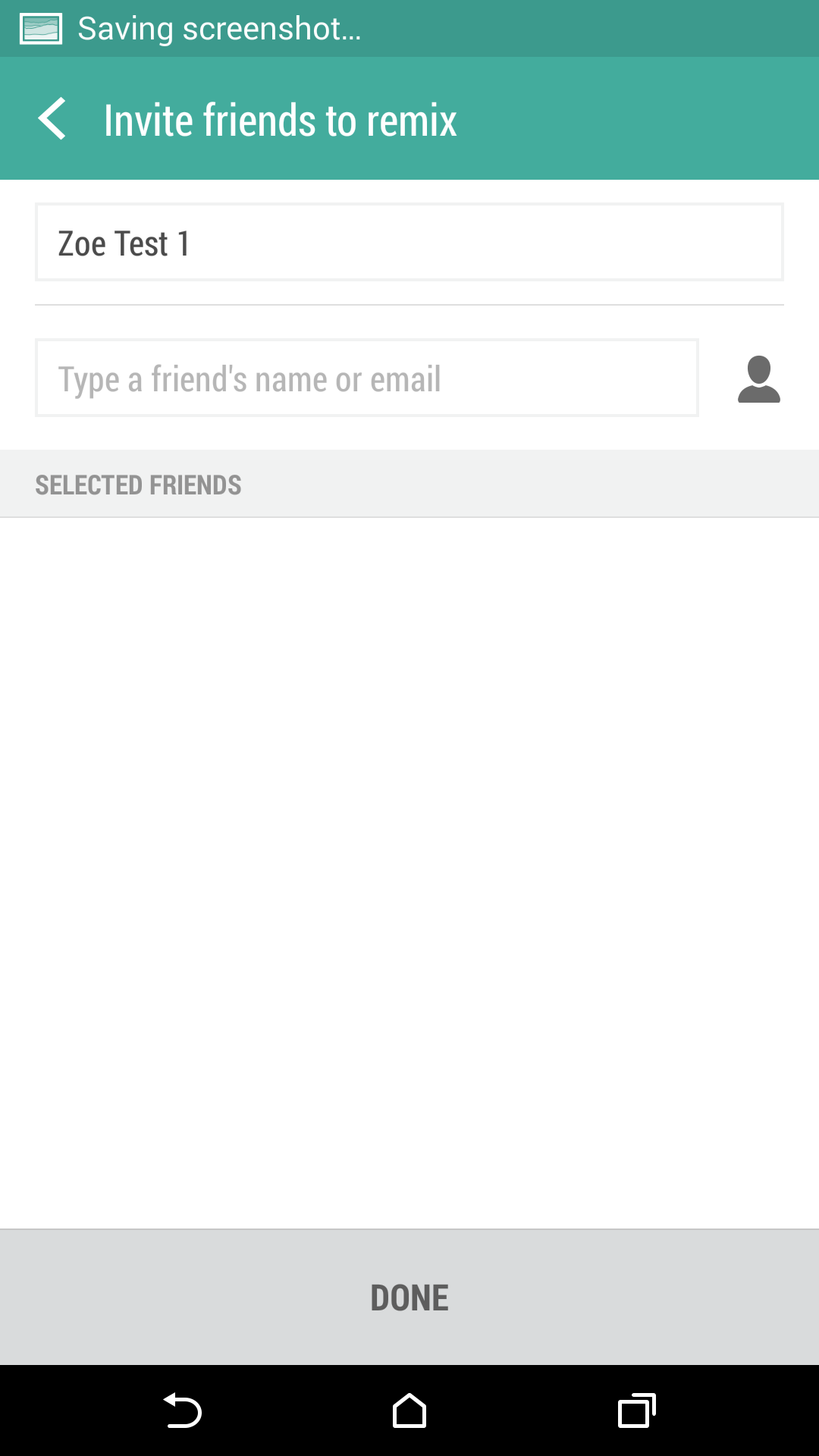
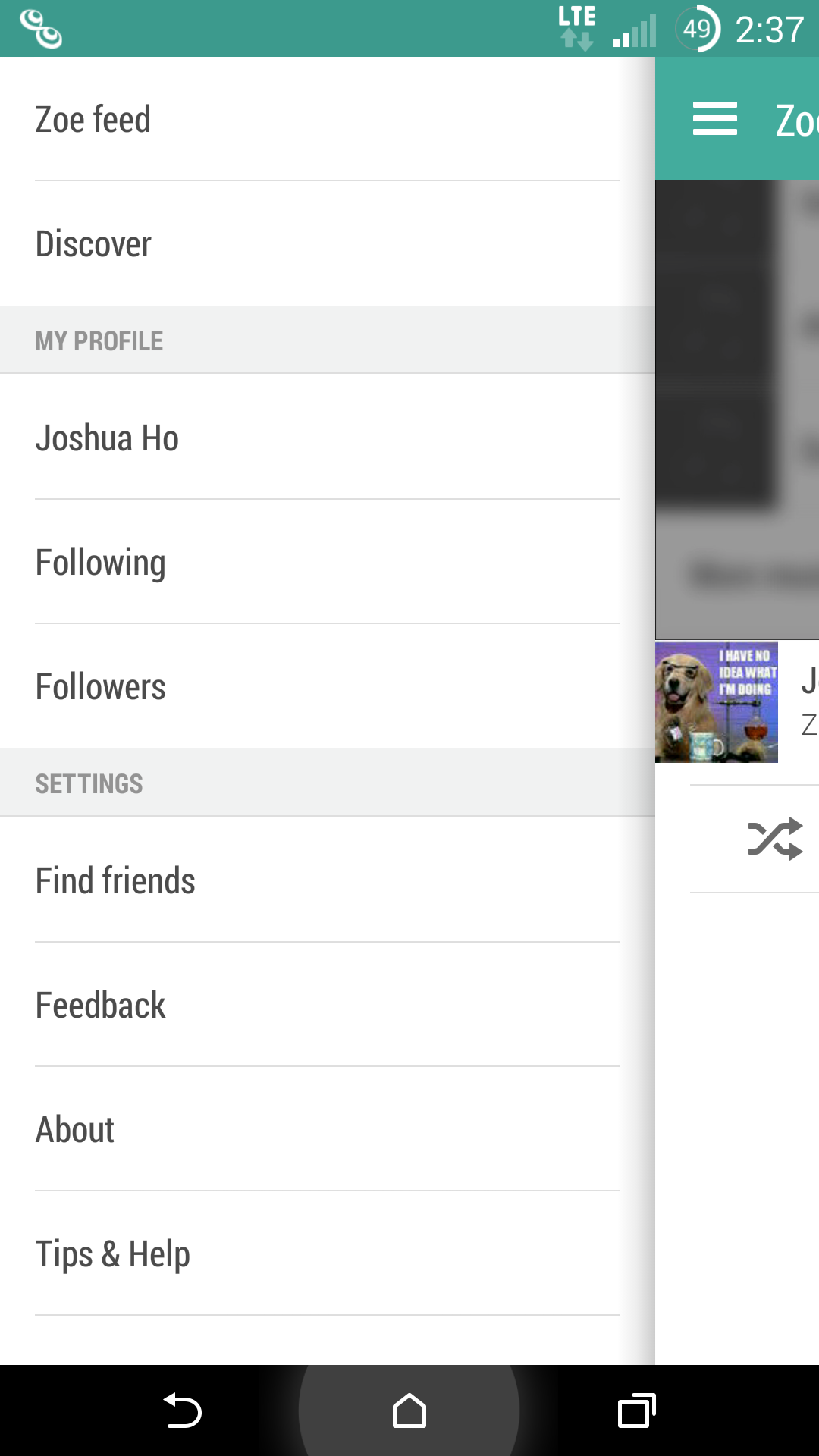
HTC Launches Zoe Beta: Hands On and First Impressions


Today, HTC is finally launching their Zoe application. Normally, such an announcement is rolled into a smartphone launch, but the launch of this application is one of the first to stand alone. In fact, this is the first application launched by HTC Creative Labs. As a result, the vision and strategy behind this application is dramatically different from HTC's existing hardware and software divisions.


But before we dive into what this means for HTC, it's important to see what this application is. In short, Zoe is the culmination of multiple pieces of HTC Sense, packaged into a single application. It integrates the video highlights feature first introduced in Sense 5, and effectively brings back the HTC Share application which disappeared with the launch of the One (M8). For those that haven't kept up with what these features are, video highlights was an extension of the gallery application in HTC Sense, which allowed for automatic creation of ~30 second highlight reels. These highlight reels were automatically set to music with specific cuts and animations based upon the theme selected. HTC Share was simply a method to present highlight reels and all of the photos/Zoes used in a highlight reel over social media. Both of these were well-received when they first launched, and even now they're good features to have.
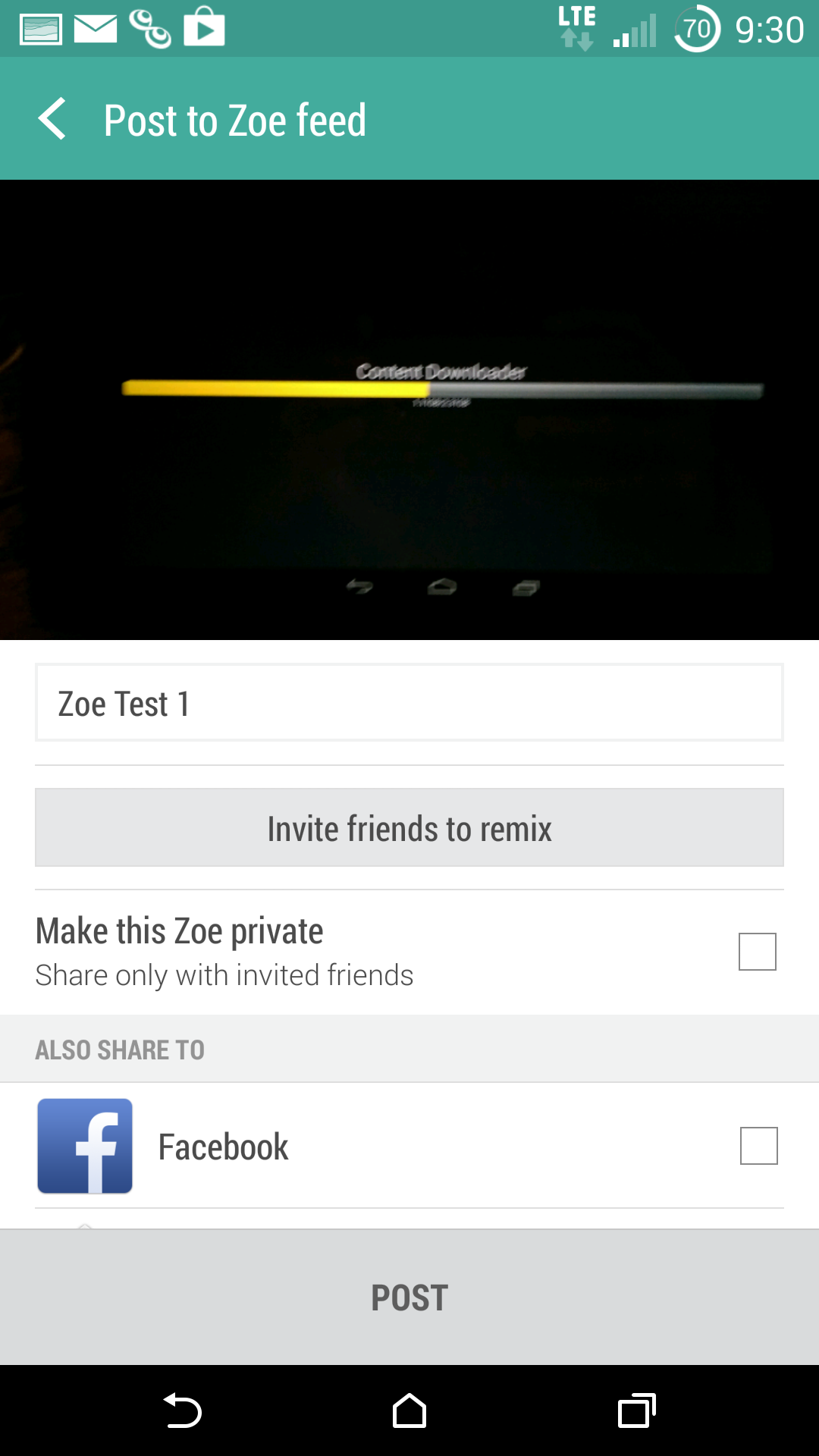
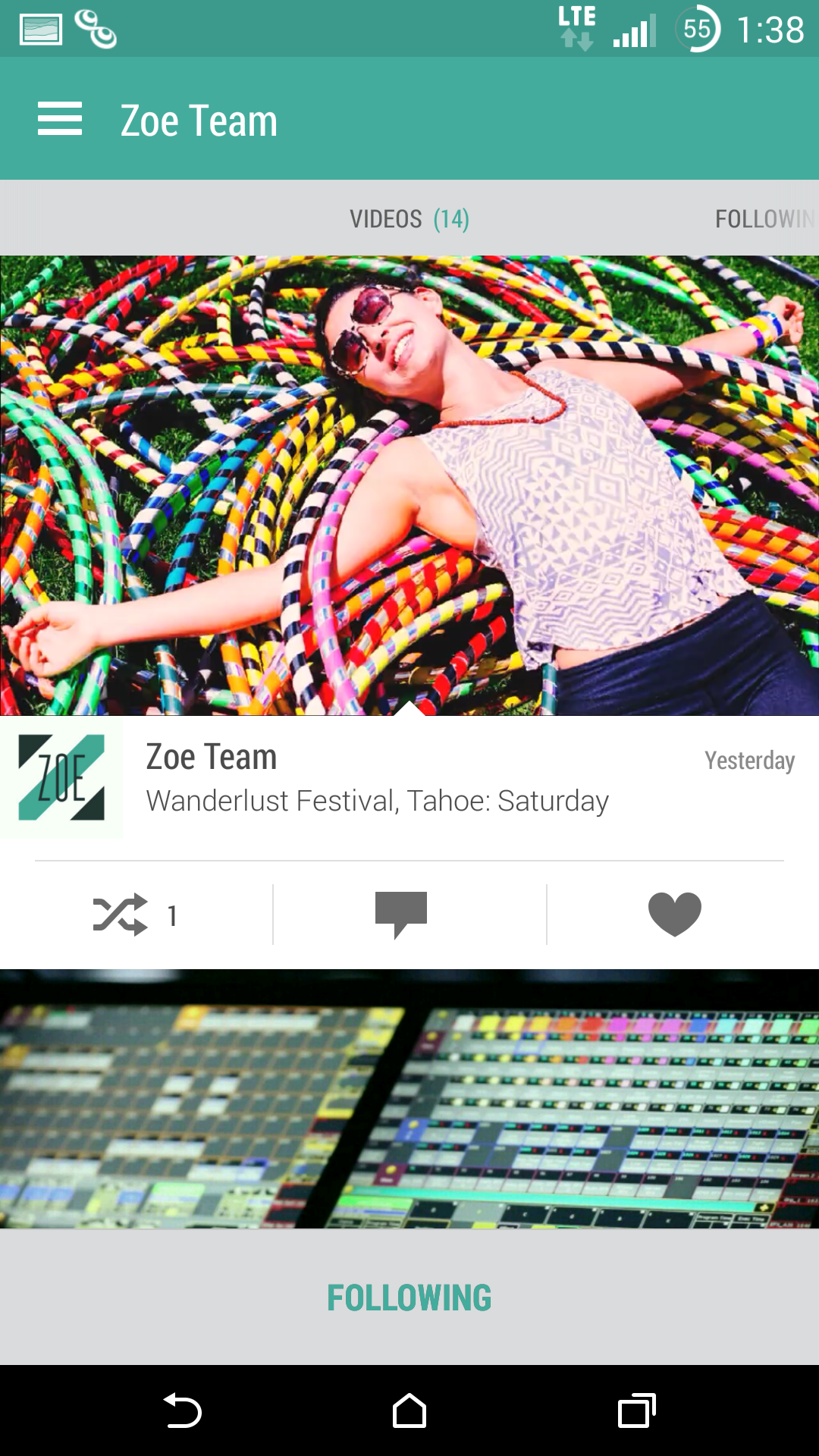
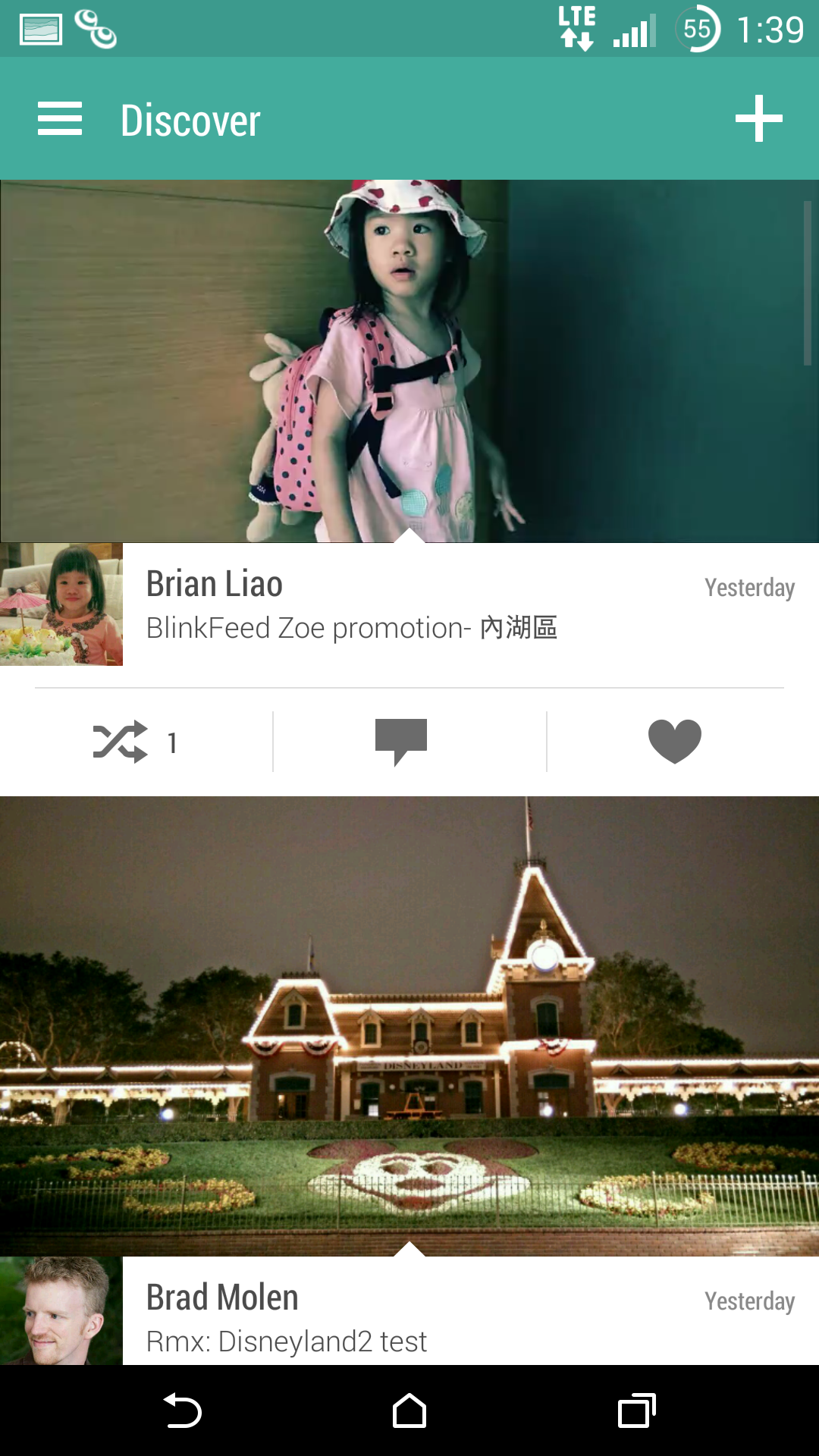
There's definitely more to Zoe though, as HTC has integrated a social network aspect with the ability to collaborate and remix other people's videos. While viewing highlight reels from friends using the Zoe network is expected, HTC has also integrated a discovery feature to see highlight reels from other people. In summary, the Zoe application brings HTC's video highlights feature and HTC Share to smartphones running Android 4.4 and adds a social network aspect on top.
In practice, it works just as expected in theory. HTC has done a surprisingly good job of bringing the Sense 6 UX to devices like the Galaxy S5, although some aspects like the status bar don't carry over perfectly. HTC has done a good job of providing a small taste of the well-designed HTC Sense 6 UI without removing major selling points from HTC devices. HTC emphasized that the major goal for this application was to become widely adopted, as while these features were good selling points for HTC hardware there was no real way to add a social network on top without making these features available to non-HTC devices.
In discussions with HTC, it seems clear that they are prioritizing user experience first over a monetization strategy. This is made clearer by the fact that there aren't any in-app purchases at this point in time. Of course, there are plenty of possibilities in this area once Zoe becomes widely adopted. Premium themes and music, along with in-app advertising were all mentioned as ways that HTC could bring in revenue. While HTC wasn't clear on how this would drive hardware sales, it wouldn't be surprising to see features exclusive to HTC devices in the future. It's surprising how far HTC has come in their software design, and I wouldn't be surprised to see this take off. Even if people aren't interested in the social networking aspect, the ability to create highlight videos and share them on pre-existing social networks is quite compelling. The social features also have great potential in situations where multiple people attend an event and take photos and videos on multiple devices. However, it's not quite clear whether this will gain the popularity of applications like Instagram and Twitter, and even if that happens it's currently hard to see the benefits to HTC's hardware division.
As of publication, the HTC Zoe Beta is available on the Play Store. HTC has stated that Android 4.4 devices should be compatible with this application although there may be additional restrictions.

Sunday, 10 August 2014

Samsung Galaxy S4, S5, HTC One and LG G2 Installation and Update for Android 4.4.3


The updates of Androids have been performed in a couple of phases every time. While there are systems that run on the Android 4.4.4, some are still in line for the Android 4.4.3. The same is happening to devices like HTC, Samsung, LG or Motorola. 
Luckily, there are some products that are getting the upgrade; those are Samsung Galaxy S4, LG G2, Samsung Galaxy S5 or Nexus and HTC devices.

Samsung is well known for its initial flagship faster upgrade than the other companies. The Samsung Galaxy S5 and Samsung Galaxy S4 were related to be given the update June and then in July. If the upgrade will not be done in August, it should be a September straightens. Motorola managed to incorporate the updates for Android 4.4.4 on Android 4.4.3. People might be able to skip the updates, if Samsung can do that.
Compared to Samsung latest smartphones, LG G2 and G3 are not as powerful in sales part. However, they have sales that are significant to worth monitoring their upgrades. LG G2 and G3 run on Androids 4.4.2. The company has kept the updates but Android believes that Android 4.4.3 is a couple of weeks off with the Android L set in the following months.
Another company, HTC, was in spotlight when it apparently drop down getting updates for its smartphones on time. Even so, the update named Android 4.4.3 was launched for HTC one M8 unlocked variants to T-Mobile and Sprint and the HTC one M7 would definitely follow its steps.
As said, Motorola launched the Android 4.4.3 update with fixes in Android 4.4.4 for Moto G and Moto X. Thus, the adjustments are still depending on carriers. Moto E, by the reports, is not yet certified to get the Android L update opposed to the two above-mentioned.

Friday, 8 August 2014

HTC-Made Google Nexus 8 Tablet Tipped to Feature 4GB of RAM, Android L


nexus_7_2013_official_play_store.jpg

Google still hasn't revealed plans for launching a new Nexus tablet; though we have confirmation the Nexus 5's successor, as per Sundar Pichai, would arrive sometime in the second half of 2014. However, this doesn't stop leaks regarding the next-generation Nexus tablet from coming.
New details about the alleged HTC-made Nexus 8 tablet, previously referred to as 'volantis/ flounder', have surfaced online. A Twitter user named UpLeaks has claimed that the alleged Nexus 8 has been codenamed T1, and will come with Android L out-of-the-box.

The tipster has also listed some of the purported specifications of the alleged Nexus 8 tablet, which seem to be quite high-end. The list includes a 64-bit Tegra processor; a MDM9x25 modem (3G model); 4GB of RAM; an 8-megapixel rear camera with flash; a 1.6-megapixel front camera, as well as GPS and NFC connectivity. An earlier report had suggested that the alleged Nexus 8 tablet would run the 64-bit Nvidia Tegra K1 chipset, along with an incredible 5GB of RAM.

Another report by Gforgames, citing South Korean certification agency RRA (Radio Research Agency), suggests that the unannounced HTC-made Nexus 8 has just been certified. The rumoured HTC device with code number '0P82100' has been spotted at the RRA site.

The alleged Nexus 8 tablet has been long-rumoured to be built by HTC, the Taiwanese giant, and hit store shelves by Q3. The anticipated HTC-made Google Nexus 8 tablet is also said to feature a 'high performance' 8.9-inch display, in an attempt to compete with Amazon's Kindle range and Apple's iPad mini. Prior to this, two alleged Nexus models (Nexus 6 and Nexus 8) were spotted in the Chromium codes.

In June, Google's Dave Burke confirmed that the Nexus program would continue unaffected by the Android Silver program and a new Nexus flagship running Android L can be expected to launch later this year.

Friday, 1 August 2014

HTC Unveils Newest J Butterfly, a Waterproof One (M8) With a Real Camera


HTC J Butterfly

A new J Butterfly device has been announced by HTC, set to hit overseas markets. The device looks quite similar to this year’s One (M8), but does feature a few updated specifications. As for the exterior, the J Butterfly has been graded with water and dust resistance, and also received a major camera sensor improvement over the One (M8). 
As for full specifications, the new J Butterfly features a 5″ LCD3 Full HD display, Snapdragon 801 processor, 2GB of RAM, 13MP rear-facing camera (with Duo setup), 5MP front-facing camera, 2,700mAh battery, 32GB of storage, microSD slot, Bluetooth 4.0, IPX5/IPX7 (water and dust resistant), and runs Android 4.4 out of the box. 
The last J Butterfly device to hit the US was the DROID DNA, but with Motorola now commanding all DROID branding, we shall see if this souped-up J Butterfly ever hits our shores in some variation.
Do you like it?


Friday, 25 July 2014

Google Nexus 6 will not made by LG, but by HTC


LG Electronics is reportedly not working on the upcoming Google Nexus 6.


According to Motoring Crunch, LG's global communications director, Ken Hong, revealed that LG knows nothing about the status of the next Nexus smartphone. Moreover, it also has little knowledge about the rumored Android Silver program. The LG exec continued that the company has not been called to work on any Nexus device.

The South Korean company was in charge of making the two previous Nexus smartphones. The good business partnership of the two companies gave rise to Nexus 4 and Nexus 5. The two smartphones turned the heads of many due to a good combination of fair specs and features as well as an incredibly cheap price.

It is true that the manufacturer behind the Google Nexus 6 will likely be HTC. Until now, there were speculations that HTC will work on the handset. This announcement from LG almost confirmed that HTC is taking the helm in making the Google Nexus 6.

There were previous rumors that claimed that Google axed the Nexus line in exchange of the Android Silver program. However, this was denied by a Google exec at the company's I/O Developers' Conference.

Google Nexus 6 is rumored to pack high end specs that includes a 64-bit version of its Snapdragon 800-series chipset clocked at 3 GHz; 5.2-inch full-HD, curved LCD display protected with Corning Gorilla Glass; 3 GB RAM; 13 MP camera and a 5 MP front-facing camera; Bluetooth; NFC; Micro-USB; Wi-Fi; and 4G. However, Google has not confirmed any of the aforementioned rumors.

Nexus 5 prices have been discounted on the online web site eBay. One of the best indications that a new smartphone is coming is that prices get slashed. Google Nexus 6 release date will most likely take place in October or November. The aforementioned time frame has been the official release date window of the Google Nexus 6. This will ensure that the device will make an appearance right before the gift-giving season.

Monday, 14 July 2014

Unofficial Android L port lands for HTC One


Owners of older HTC One handsets now have an unofficial Android L build


Android L is still some months away from being officially available, but the preview release has given developers enough to port the firmware to HTC's One M7.
Google only released its preview Android L firmware for the Nexus 5 and latest Nexus 7 at the start of the month, but within days developers had built ports extending what was available inthe preview to the Nexus 4 and older Nexus 7 models.
Others meanwhile have extracted working components, such as the Android L keyboard — it made a brief appearance on the Play Store before being removed by Google last week. And there's even the Nova launcher, with features borrowed from the preview release.
As of last Friday, HTC One M7 owners have also had another way to play with Android L, thanks to about two weeks' of work from XDA developer Suyash Srijan who created an L port for the old HTC flagship.
Given the port's status as an unofficial 'alpha' release of an incomplete product, it's probably not the wisest thing to flash to a HTC One being used as a primary phone. Some of the features that aren't working including wi-fi, Bluetooth, sensors, camera, and sound. In other words, "half the things that don't work" could render a device fairly useless to anyone wanting more than a sneak peek of Android L on their HTC One.
For HTC One owners that do want to install the firmware, the process should take about 15 minutes. HTC One M7 owners wanting the real deal could be in store for the Android L update when it arrives later this year — probably around the same timeframe this year as KitKat's launch last October.

Other devices that are most likely to get the Android L update include of course the Nexus 5, Nexus 7, Nexus 4 and Nexus 10.
Besides the new 'material design' UI overhaul and improved battery performance, Google has taken a leaf from Apple's book on notifications on a locked iOS screen, which pop-up when the screen is off. It's a handy feature that's missing from KitKat but with Android L, developers will be able to push summaries of messages in some apps to the lockscreen rather than be limited to icons that can't be viewed from the lockscreen.

Saturday, 12 July 2014

HTC launches Desire 616 Dual SIM for Rs 16,900, One E8 for Rs 34,990


HTC launches Desire 616 Dual SIM for Rs 16,900, One E8 for Rs 34,990

As expected, HTC has launched the Desire 616 and One E8 in the Indian market, at an event held in Delhi. The Desire 616 is priced at Rs 17,200 and will be available starting tomorrow. On the other hand, the One E8 carries a slightly hefty price tag that reads Rs 34,990 and will be available by the end of the month.

The HTC One (E8) is a watered-down HTC One (M8), and has similar specifications, without the high-end metal body. Running Android 4.4.2 KitKat and the HTC Sense UI,  the One E8 features a 5-inch SLCD 3 full-HD (1080×1920 pixel) display, which is the same as the one seen on the One M8. In fact, it also shares the 2.5GHz quad-core Qualcomm Snapdragon 801 processor, 2GB of RAM and the Adreno 330 GPU, with the HTC flagship.

Another common trait is the BoomSound speaker setup on the front side of the E8, which should ensure loud audio. It comes with 16GB of internal storage ( further expandable up to 128GB via microSD card). In terms of connectivity, there’s HSPA, Cat 4 LTE, dual-band Wi-Fi a/b/g/n, Bluetooth v4.0, and GPS with with A-GPS, GLONASS. The One E8 is a dual-SIM device. Finally, there’s no Ultrapixel shenanigans on the E8, which gets a 13-megapixel camera on the back, along with a selfie-friendly 5MP clicker on the front.

Launched earlier this month in China, the mid-range dual-SIM Desire 616 sports a 5-inch HD display and sports a 1.4GHz octa-core processor. It comes with a decent 1GB of RAM, a 8-megapixel rear camera and a 2-megapixel front shooter.  Disappointingly the internal storage is just 4GB ( further expandable up to 32GB via microSD card), and there’s a 2000mAh battery as well. The connectivity options include Bluetooth 4.0, Wi-Fi b/g/n, GPS, GPRS/ EDGE and 3G.

At this launch price, the Desire 616 has a great opportunity to be HTC’s big hit, but the competition has grown by leaps in the last few months and there are new rivals such as Xiaomi around the corner.

Monday, 7 July 2014

HTC Desire 616 officially announced, features octa-core processor


HTC has announced the Desire 616 smartphone in Singapore for $240, which converts to approximately Rs.14,500. The smartphone features a 1.4GHz octa-core CPU, 1GB of RAM and has a 5-inch 720p display. It's also a dual-SIM phone, which also indicates that HTC has designed it for emerging markets. HTC is widely expected to launch the phone in India later this week. 

Other than its ARM Cortex A7 octa-core architecture, the phone has a 8-megapixel camera on the back and a 2-megapixel front facing camera. Obviously, this phone is different from most HTC offerings as it leverages a cheaper chipset. Probably, it's using a True-Octa chipset from MediaTek. 


Other features of the phone include a 2,000mAh battery, 4GB of internal memory, and a microSD card slot. There is no clarity over the version of Android it will run. 
Design wise, it remains true to HTC's industrial design, though unlike its high-end smartphones like the newly launched One (M8) it uses a plastic chassis instead of a premium metal finish. 

The mid-range of the smartphone market has already seen an influx of high quality products from tier one OEMs like Motorola, Asus, Nokia, and Lenovo and HTC's Desire 616 will surely make the cut if it's priced correctly. 

A direct conversion of the Singapore price would be extremely wishful as we recently witnessed with the launch of the BlackBerry Z3. However, if the phone is priced below Rs.20,000 on the basis of its specs alone it will be a compelling option considering the type of brand equity HTC still manages to command. 

Friday, 4 July 2014

HTC Volantis coming with 5 GB RAM, 64 bit Tegra processor


The purported HTC Volantis tablet is once again in the news. Now, EVLeaks has tweeted some of its alleged features, including unbelievable and unprecedented "5 GB RAM". EVLeaks has also tweeted a picture of the tablet with aluminum unibody.
As per the tweet, the HTC Volantis has 64 bit Tegra K1 processor and to run that there is 5 GB DDR3 RAM. It went on to add that the tablet's 8.9 inch display has 1680x1050 pixels resolution but it should come with 2560x1600 pixels resolution.
Moreover, the post added that the HTC Volantis has 64 GB internal storage but we believe that it would come in different storage variants. It is claimed to have a 5 megapixel rear camera, capable of recording full high definition videos but EVLeaks added that it should retail with an 8 megapixel unit.
Earlier, a report in May this year claimed that this HTC Volantis will be launched as Google Nexus 8 and will have the latest Android 4.4 KitKat MR2 operating system version.
Ofcourse, no official from either HTC or Google has confirmed these reports.'

Thursday, 3 July 2014

HTC One M8 vs. Samsung S5 vs. Nexus 5 – Which One Is a Better Choice?


It is the clash of big brands. If you are looking to buy a high end phone that comes with some of the smartest features and specifications, you may have a hard time picking between Samsung, HTC and Google.
Here, we will talk about three of the top models by each of the brands – namely HTC One M8, Samsung Galaxy S5 and Google Nexus 5. Each of these models is a winner in itself and analyzing the specifications and features will help you identify the best one for you.
The HTC One M8- What Makes It So Special?
With a 5 inches super LCD IPS panel, the One M8 comes packed with a superior set of specifications. The designing of the phone is classy as it comes with an aluminum chassis, which makes it elegant and superbly stylish. As far as the form factor is concerned, this phone is going to easily win over Galaxy S5 because its designing has been applauded by one and all.
It runs on 2.3 GHz quad core processor which means that you should not have any trouble with multitasking. Even the RAM offered is 2GB, which is good, if not commendable. It runs on the Android KitKat OS and also has the latest HTC Sense software.
Samsung Galaxy S5 – Smarter Than the Average?
The galaxy series by Samsung turned out to be quite a hit among users. The galaxy S5 has a 5.1 inches super AMOLED screen which is capable of displaying 3D graphics clearly. It has an ambient light sensor and the display is sharp and bright. With a pixel density of 432 ppi, you will get a good clarity when viewing images.
It runs on 2.5 GHz CPU, which is faster than what HTC has to offer. The RAM offered by this device is moderate at 2 GB. Multitasking, while using galaxy S5, should not be a problem. It too runs on Android KitKat OS and the camera features make this model a winning choice.
You have a 16 MP rear camera, which has a stunning shutter speed. The camera will help you click some of the best pictures with the right details and clarity.
Google Nexus 5- Can You Beat It?
Google created quite a stir in the market with the launch of Nexus 5. It is perhaps the best launch by Google so far. The cutting edge, sharp design of Nexus makes it one of the most stylish phones available in the market. At 4.95 inches, the Nexus sits comfortably in your hand and the IPS LCD display ensures that you are pleased with the device.
Even this model has a 2 GB RAM and is powered by 2.26 GHz quad core CPU. As far as the CPU performance is concerned, the Galaxy S5 seems to have an upper hand as it has the Snapdragon 801 rather than 800 used by Nexus 5.
Now that you are acquainted with all these three models, you can come to your own decision regarding which one looks to be apt for you. Each of them is a winning choice.

Sony Xperia Z2 vs. HTC One M8 – Comparison of Specifications and Features


The smartphones from Sony and HTC have shown quite an improvement during the past few years.
The HTC One has already received accolades from the masses with respect to its features and specifications. Nevertheless, the Sony Xperia Z1 also experienced a similar fate. The next generation smartphones from Sony and HTC promise to offer much better phones for the masses. The recently launched Sony Xperia Z2 and the HTC One M8 is the next generation pair of smartphones that would give each other a tough competition in the mobile market.
Design
Beauty lies in the eyes of the beholder. The Sony Xperia Z2 and the HTC One M8 poses a fine example of beautiful design of the next generation premium smartphones. Both the Xperia Z2 and the One M8 have made use of aluminium instead of plastic. However, the Xperia Z2 has complemented itself with resilient glass back panel. Both the smartphones are peculiar in one feature or the other. Yet, one cannot deny the fact that Sony Xperia Z2 and the HTC One M8 are state of the art trendy models in the current smartphone industry.
The Xperia Z2 may attract fingerprints but the glass used is scratch resistant. In comparison, the One M8 would resist fingerprints as well.
Display
Both the Xperia Z2 and the One M8 come with large screens. The large touch screens show the intensity of the new Android operating system. The Sony Xperia has a 5.2 inches display touchscreen whereas the One M8 has a 5 inches touchscreen. However, both these smartphones come with same full HD resolutions. One major difference is the Xperia Z2 has the ability to record 4K videos, whereas the HTC One M8 lacks this functionality.
Operating System
Both the Xperia Z2 and the HTC One M8 come with beautiful bodies and state of the art specifications. Both these smartphones run on the most recent Android operating systems. Sony has limited optimization; hence its operating system may provide a stock android experience to the user. In comparison, the HTC also has limited customization but with Sense 6.0, the smartphones offers more features than its competitor. Both these smartphones come equipped with a powerful processor ensuring an improved performance.
Processor
The Sony Xperia Z2 comes equipped with a powerful 2.3GHz processor along with time tested Adreno 330 GPU. The Xperia Z2 has an upper edge with 3 GB of RAM in comparison to the 2GB RAM of the HTC One M8. The HTC comes powered with 2.3GHz quad core processor and similar GPU as that of One M8. The Xperia Z2 is priced at $650 in comparison to the One M8 that is priced at $690.


Wednesday, 2 July 2014

Galaxy S5 Mini, HTC One Mini 2 Chase Lower End Smartphone Market


Samsung, HTC, LG and other Android mobile device makers keep introducing a dizzying array of new smartphone models in a relentless effort to build market share at the expense of their competitors. It's clear that Samsung has done the best job of separating itself from the Android pack, considering that the company and Apple's iOS-based iPhone combine to produce more than 100 percent of the smartphone market's profits. Their results exceed 100 percent because some companies actually lose money selling mobile devices. 


As of late, however, HTC has put a fresh and innovative foot forward to try to change its persistently poor luck in the mobile market. The company's flagship HTC One M8 has received rave reviews around the Web for its dual camera and beautiful design. Recently, HTC unveiled the HTC One Mini 2, a device that looks similar to its big brother but comes at a lower price. Samsung responded with a trimmer device of its own, called the Galaxy S5 Mini. That smartphone is designed specifically to take on the HTC One Mini 2. Both companies' mini models are vying for the lower end of the smartphone market.


Saturday, 28 June 2014

HTC One M8 Review


Good The HTC One M8's sumptuous aluminum body makes a beautiful background for this top-flight smartphone's brilliant 5-inch display. It runs on a powerful quad-core processor and Android KitKat, the stereo speakers deliver excellent sound, and the depth-sensing camera brings a ton of useful features.
Bad The One M8’s battery is not user-removable, making it harder to replace once the battery inevitably wears out. The phone's sealed chassis is not water-resistant, and the One M8's photos look less sharp than competitors'.
Bottom Line Elegant style, raw power, and sophisticated features make the HTC One M8 an excellent smartphone choice for anyone but the most exacting photographer.

Think of the HTC One M8 as the big-budget sequel to an Oscar-winning indie film. Last year's HTC One won rave reviews and obsessed fans, but not enough customers to keep HTC growing. This year, HTC needs a rip-roaring box-office hit with its flagship phone.
It could happen. The One M8 is undeniably the most impressive handset the company has ever minted. Like its predecessor, the M8 brings a refined and beautiful software and speedy performance, all wrapped in a lithe and eye-catching aluminum skin.
The HTC One M8 must compete head-to-head against its archrival's freshest mobile machine, theSamsung Galaxy S5, and compete it does. Aesthetically speaking, the HTC One M8 runs rings around the GS5 with its elegant and intuitive Sense interface. What's more, though the M8 may lack every bell and whistle that Samsung packs into its phones, it matches the GS5 on almost every feature that really matters, from processing speed to user interface. Only the camera and its ever-so-slightly muddy shots give me pause.

Design

When the original HTC One hit the mobile scene last year, I was stunned by its sophisticated all-metal unibody chassis. Not only was it sturdy and comfortable to grip, but thanks to a smoothly curved back and matte finish, its polished edges elevated the handset to an unprecedented level of luxury. Frankly I'd never seen a handset look that good, and I've handled a lot of mobile phones.
HTC One 2
Designwise, this certainly sets the bar high for any subsequent smartphone, let alone an HTC One follow-up. I can confirm, though, that the new HTC One M8 is one heck of a handsome device -- the sexiest smartphone I've seen all year, in fact (including the Galaxy S5 and the Sony Xperia Z2). While HTC's latest creation is more conservatively styled than the previous One, it has a look that's just as premium.
For instance the M8's bezel (where the screen and phone edge meet) is alluringly reflective and convincingly conveys that you're holding a luxury handset. Even so, the bezel is not polished to the same eye-catching sheen as the first One was. I also found the back surface of my M8 review device, though lovingly minted in a classy brushed-metal motif, smoother than the old HTC One, which had a roughness almost like a ceramic bowl. Indeed this gray M8's slicker texture doesn't wick away moisture quite as effectively. The result is a slippery, more friendly canvas for grease than its predecessor's matte back.
To be clear, the One M8 comes in two additional colors (silver and gold) that don't sport the brushed-metal pattern (which HTC calls "hairline"). The fallout is that both the silver and gold versions of the M8 lack the gray model's slippery feel. And in other ways the M8 is just as beautiful as its predecessor. It uses a gorgeous all-aluminum body that flaunts a similar curved backing. The M8 also feels superbly solid, strong, and well-constructed.
I admit these are minor issues and nitpicking on my part since the M8 brings important design improvements to the HTC One franchise. Notably the phone's screen is now larger -- 5 inches across (as opposed to the HTC One's 4.7-inch screen). And unlike the first One, HTC says the One M8's chassis is truly built entirely from metal. By contrast the company explained the original One's body was 70 percent aluminum, the rest being plastic.
Additionally the M8 sports a pair of powerful stereo speakers that flank the display. Also branded by HTC as BoomSound, these front-firing grilles belt out a ton of sound, at least for a mobile phone. Even better, the M8 is definitely louder and produces sound with way more presence than last year's model. It's to be expected, since HTC says it enhanced the M8's BoomSound audio system by cranking up the volume by 25 percent and improved its frequency range. Don't just take my word for it. Be sure to check out our deep dive into the HTC One M8's upgraded audio prowess.
Despite the phone's larger display, the device remains roughly the same size, thickness, and weight. Tipping the scales at 5.4 ounces (154.2 grams), the M8 understandably stands a little taller yet is just slightly heavier than the older One (5.04 ounces/142.9 grams). It's heavier than the Galaxy S5, too (5.1 ounces/145 grams) even though the M8 lacks extra hardware such as a heart-rate monitor and fingerprint scanner.

Display

From the moment I picked up the HTC One M8, I knew its big 5-inch screen was high-quality. While it can't produce the same deep blacks and vibrant colors conjured by the OLED displays you'll find in Samsung Galaxy handsets such as the Note 3 and GS4, the M8's IPS LCD has a lot going for it. Specifically these are admirably wide viewing angles, a pleasing amount of brightness, plus rich colors.
With a full HD resolution (1,920x1,080 pixels), photos, video, and text were also crisp on the phone's screen even if it has a marginally lower pixel density than the original One (which had the same number of pixels on a smaller 4.7-inch screen). All this adds up to a display that does justice to any visual content you choose to enjoy on the M8.
Some words of warning though; if you choose to view the One M8's screen in the great outdoors, I suggest you do so without polarized sunglasses. When I did this with my pair of Ray-Bans, the phone's screen in portrait orientation was dim to the point of being unreadable. Flipping the One M8 into landscape position wasn't a problem and the display was just as bright as usual under these conditions.

Software and interface

Premium design isn't the only ace in the One M8's hand. The handset runs Google's Android 4.4.2 operating system, the latest iteration from the tech giant. KitKat brings a cleaner, less cluttered layout, tighter integration with Google search, plus faster performance (especially on devices with lower specs). Layered on top of that is HTC's most recent revamp of its Sense UI, version 6 (see next section). As you'd expect from a smartphone churning such modern mobile software, the M8 has access to all of Google's bells and whistles.
This includes Gmail, Google plus social networking, the Chrome browser, and Drive file storage. The phone also taps into the company's vast universe of media content via Google's Play digital storefront. That means that books, movie rentals and purchases, games, and the more than 1 million apps hawked by third-party developers are just a finger tap away.
You'll find the futuristic Google Now personal notification system onboard, too, either in widget form or launched by swiping upward from the bottom of the screen. It provides insightful reminders, suggestions, and directions automatically based on your past search history, time, and location data. It's the driving force behind the Google Wear operating system for smartwatches, clothing, and other wearable tech gear.

Sense reenvisioned

With every new flagship phone HTC retools its custom Sense interface and the launch of the One M8 is no different. For this latest rethink of Sense, version 6, the company says it has cleaned up the look of the Android skin to give it a freshened appearance.
Essentially the overall layout of Sense 6 remains the same. You have numerous home screens to customize to your heart's content (though now five instead of the six that were in Sense 5.5) with app shortcuts and widgets. Likewise, the leftmost screen is occupied by the BlinkFeed news aggregator; thankfully HTC gives you the option to turn the service off if you don't want it.
One subtle tweak HTC made to Sense are colors coded to major phone features and their palette of hues coordinated with themes you select from the M8's settings menu. For instance the phone dialer and messaging functions may have a blue header while the gallery app is marked with a purple strip across the top of the screen. Settings have a special highlight hue as well, say violet.
Bundled with my HTC One M8 unit were three color themes: one was greenish-blue, the second warmer orange and reds, and the third skewed to electric purples and violets (my favorite). A fourth theme takes the conservative approach, consisting mostly of black and white paired with a grayscale wallpaper.

BlinkFeed sees further

A surprising feature HTC unveiled with the previous One last year was BlinkFeed, a magazine-like news aggregator in the vein of Flipboard. It's designed to pull in articles from a vetted pool of media outlets and websites, and then serve everything up fresh via one vertically scrolling panel.
BlinkFeed is set as the leftmost home screen, though unlike the first iteration of the feature (later fixed in Sense 5.5), users can disable it if they find no use for the function. Additionally, BlinkFeed is no longer mapped to phone's home button as it was on the original One device.
The biggest change to BlinkFeed is that you now have the option to search for and add custom topics to the service. For example if you want to keep apprised of the latest developments in nuclear fusion, or perhaps news around aviation, BlinkFeed will do its best to return related results. Frankly it's a welcome enhancement that helps BlinkFeed approach Flipboard's level of customization. It's also worth mentioning that Samsung's similar My Magazine feature lacks this ability.
HTC has also brought support for notifications from third-party apps Foursquare and Fitbit into the BlinkFeed fold. This complements existing alerts and content from social-media platforms such as Facebook, Twitter, and Google+ that were already within BlinkFeed's reach.

A dash of gesture controls

Not to be outdone by the LG G2 and Motorola Moto X, the HTC One M8 also flaunts its own take on gesture-based handset commands. Similar to LG's KnockOn feature, you can wake up the M8 simply by tapping its screen twice with your finger. Provided you haven't applied PIN or pattern-swipe security (which requires a lock screen), at this point sliding your finger right launches BlinkFeed, while doing the opposite whisks you straight to the main home screen.
To fire up the camera app in a flash, just turn the M8 into a horizontal position, then hold down either end of the volume rocker (volume-up or -down). The idea here is to save time by not having to first press the power button to activate the display, then hunt for the camera icon. Motorola took a similar approach with its Moto X, which allows users to launch the camera with two quick twists of the wrist.
Not to be outdone by the LG G2 and Motorola Moto X, the HTC One M8 also flaunts its own take on gesture-based handset commands. Similar to LG's KnockOn feature, you can wake up the M8 simply by tapping its screen twice with your finger. Provided you haven't applied PIN or pattern-swipe security (which requires a lock screen), at this point sliding your finger right launches BlinkFeed, while doing the opposite whisks you straight to the main home screen.
To fire up the camera app in a flash, just turn the M8 into a horizontal position, then hold down either end of the volume rocker (volume-up or -down). The idea here is to save time by not having to first press the power button to activate the display, then hunt for the camera icon. Motorola took a similar approach with its Moto X, which allows users to launch the camera with two quick twists of the wrist.
I certainly applaud HTC for folding these new gesture controls into Sense since they do increase the overall usability of the M8. I especially find Motion Launch helpful because it's way more convenient to tap the M8's screen than to stretch a finger toward the power key on the top edge of the phone. Using the volume button to fire up the camera isn't all that much faster than double-tapping the screen then flicking the camera icon upward. The Moto X's quick camera launch action is supremely intuitive, however, because you never have to touch the screen or press a button until you're ready to snap a picture.

Core components

If you expect the HTC One M8 to boast cutting-edge mobile components, you won't be disappointed. Tucked away inside this metallic beauty are high-octane parts to match its lovely looks. Powering the phone is a 2.3GHz quad-core Snapdragon 801 processor which frankly just rolled off of the assembly line. In fact the One M8 is the first of a new crop of flagship phones for 2014 to feature the Snapdragon 801 which includes the Galaxy S5 and Sony Xperia Z2. The Galaxy S5 will bring a 2.5GHz processor, but the change will users will hardly notice the difference.
Built by dominant mobile chip maker Qualcomm, the company says the 801 offers 25 percent faster graphics than the Snapdragon 800 that powers devices like the Note 3 and LG G2. This means speedier gameplay and swifter Web surfing. The 801 was also designed to not break a sweat when heavily editing photos after you've taken them.
Buttressing this is a healthy 2GB supply of RAM and either 16GB or 32GB of internal storage (it's up to carriers and individual markets which version you'll be able to buy). As I mentioned before, however, this new One also has an SD card slot for additional storage space. It's a critical improvement over last year's One handset and a big bonus to those (including me) who tend to load their gadgets up with music and movies. Be advised that the One M8 requires a nano-SIM card, whereas the first One used larger Micro-SIMs, so a new card (or adapter) might be in order.

Camera: This sucker is binocular

Undoubtedly the wildest change to the One M8 concerns its camera and imaging system. As it turns out all the rumors regarding dual-lenses on HTC's fresh flagship are true. The One M8 does in fact have two camera lenses on its back, as well as a dual-LED flash array. While the larger of the M8's eyes supports its main camera and handles traditional photo duties, the smaller lens (which sits next to it) is meant for an altogether different purpose.
Indeed its sole task is to tackle depth perception which allows the M8 to perform very interesting tricks. Every time you snap a picture the M8 also records optical data from its second vantage point seen through its depth-sensing lens. As a result, the One M8 lets you refocus images after you take them. So for instance you can choose subjects in the foreground to focus on while simultaneously blurring objects in the background.
In essence HTC is shooting to replicate the shallow depth of field that skilled owners of DSLR cameras often use to great aesthetic effect. It's also a technique the Nokia Lumia 1020 as well as the Lytro camera have strived to create through clever software processing. HTC calls the feature "UFOCUS" which lives in the phone's photo editing menus. Also placed here is a feature named Foregrounder which applies special filters to the background, like simulated pencil sketch-marks, motion blurring, even animated objects to indicate the changing seasons. Think snowflakes or blowing cherry blossoms, and you get the idea. Something HTC calls 3D Dimension Plus warps pictures to give them a cartoony depth that you can alter by tilting the phone back and forth.
The old HTC One Zoe engine is here, too. That means the phone's gallery app groups images and video by events and date plus mashes them up into highlight reels with canned themes and music automatically. it's an ability I like to have but sometimes it makes it tricky to sort through my photos and video. This is especially true if I can't recall when exactly I shot them.
Aside the M8's unconventional camera abilities, you also get a bucket-load of shooting modes such as night, HDR, sweep panorama, plus manual camera settings for just about everything -- except image resolution. Perhaps the reason HTC limits control over photo size is because the phone's 4-Ultrapixel sensor (really 4MP) is low-res compared with competing handsets such as the GS4, Note 3, and G2 (all of which pack sharper 13MP systems).
The image quality of test photos backed up my misgivings. While colors were accurate and white balance was correct in my experience, both indoors and outside, details appeared soft. Additionally, a deeper look into the One M8's camera performance revealed that the phone had difficulty with varied lighting conditions and often blew out bright skies in HDR mode. I can say that the One M8 does snap pictures like a speed demon, with shot-to-shot times that are virtually instantaneous.

Performance

I was prepared for the HTC One M8 to pack a processing punch, but I admit I wasn't expecting it to hit as hard as it did. The smartphone incinerated the Quadrant benchmark, scoring a jaw-dropping 24,593 -- the highest result I've yet seen anywhere. This includes the Note 3, LG G2, and of course old HTC One.
The One M8's 878.5 MFLOPs showing on the Linpack test (multithread) was also stratospherically high.
Everyday use mirrored my artificial tests; the One M8 hummed through its various function effortlessly. The phone also launched, closed, and flipped between apps and menus almost before my eyes registered the change. In a phrase, the HTC One M8 handles like greased lightning.

Call quality

I tested the HTC One M8 on AT&T's GSM network in New York, and my test calls exhibited call quality in line with what I've experienced with other handsets. People described by voice as clear and easy to understand. They also didn't notice any distractions such as background hiss, static, or clipping. Still, callers said they could definitely tell that I spoke to them from a cellular phone due to the slight compression cellular audio tends to possess.
On my end, voices came through the earpiece with plenty of volume and richness. Oddly enough, despite the M8's powerful stereo speakers calls conducted via the speakerphone were not extremely loud.

Data speeds

Connected to AT&Ts 4G LTE network in New York, the HTC One M8 turned in some swift data speeds but was inconsistent. I clocked average download throughput at a decent 7.3Mbps but at times reached as high as 16.2Mbps. I was able to push data up to the cloud no faster than 5.1Mbps and through hovered around 2 to 3Mbps.

Battery life

Equipped with a 2,600mAh battery, the HTC One M8 isn't as well-endowed in the juice department as the big Galaxy Note 3 (3,200mAh), the Motorola Droid Maxx (3,500mAh), or even the Galaxy S5 (2,800mAh).
That said, the M8's battery is a tad larger in capacity compared with the previous One (2,300mAh). The phone managed to chug along for 9 hours and 52 minutes on the official CNET Labs video battery drain benchmark. it's a satisfying result which outlasts what the first HTC One delivered on the same test (9 hours, 37 minutes).
Anecdotally I was able to make it through a full day of testing (unplugging at 8AM) with the phone pleading for a recharge by 10PM. HTC has said it plans to enable in the future a special "extreme power mode" for the One M8 to extend its run time. My test device, sadly, lacked the feature.

Conclusion

Last spring HTC had high hopes for its then-best effort yet, the original HTC One. Sadly the Samsung Galaxy S4, which offered a killer screen, impressive camera, and all the software features the company could squeeze into one handset, stole its thunder. And even more to the point, Samsung was better at getting the GS4 to more carriers faster and it had a bigger marketing budget to spend.
We see a similar drama in the inevitable clash between the Galaxy S5 and the One M8. I'd argue that HTC is better equipped to do battle this time around. Not only is the One M8 a powerful performer with quad-core processing that's neck-and-neck with Samsung's greatest, its all-aluminum design is the clear winner between the two.
More striking to me, though, is how the M8's elegantly crafted hardware and intuitive software highlight HTC's and Samsung's opposite approaches to making smartphones. Samsung's Galaxy handsets aim to please the greatest number of customers by packing in the most features and performance for the lowest price. HTC, on the other hand, targets handset connoisseurs with painstakingly constructed devices running slick and efficient Android skins. Honestly, it's a combination I'm particularly defenseless against. Sorry, Samsung, but TouchWiz and plastic materials don't feed my soul.
Based on CNET's experience with the Samsung GS5 , it's clear that the S5's camera gives the gadget one leg up over the One M8 performance-wise. This is why I can't say with certainty that the One M8 is a better phone or even if it's the best Android alternative to the iPhone 5S. But I can say that the One M8 is a truly great phone all on its own -- one worthy of anyone's investment.